
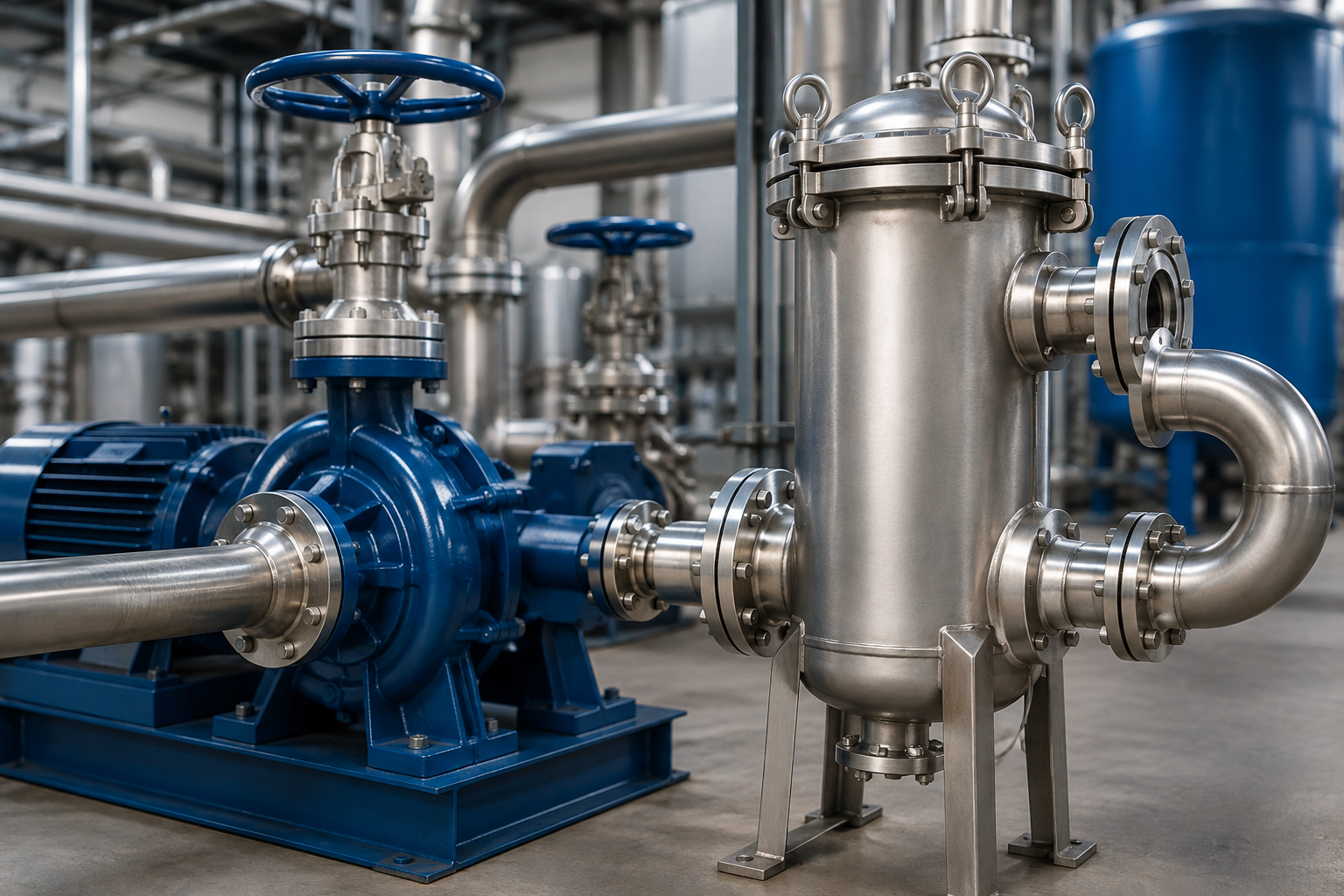
Pumps & valves are critical components in many industrial processes. They control fluid movement, maintain pressure and help production systems operate efficiently. However, even small amounts of dirt, rust, scale, metal particles or other contaminants can cause wear, blockages and performance problems.
This is where industrial process filtration plays an important role. By removing unwanted particles from process fluids before they reach sensitive equipment, the right filtration system can help protect pumps & valves, reduce maintenance requirements and support reliable plant operation.
TFI Filtration UK provides industrial filtration solutions designed for different liquid and process applications, helping businesses select filtration systems based on factors such as flow rate, contaminant load, filter rating and operating conditions.
Why Do Pumps and Valves Need Filtration?
Industrial fluids are not always completely clean. During manufacturing and fluid handling, contaminants can enter a process from raw materials, storage tanks, pipelines, corrosion, equipment wear or the surrounding environment.
When these contaminants circulate through pumps & valves, they can create several problems:
- Abrasive particles can accelerate component wear.
- Larger particles can restrict or block valve passages.
- Contaminants can damage seals and moving components.
- Deposits can reduce pump efficiency.
- Excessive contamination can increase maintenance and downtime.
How Industrial Process Filtration Protects Pumps
Pumps often operate continuously and may handle large volumes of process fluids. Contaminated fluid can cause mechanical wear and reduce operating efficiency over time.
Installing filtration upstream of a pump can help remove suspended solids and other unwanted particles. Depending on the application, cartridge filters, bag filters, strainers or other filtration technologies can be selected.
The filtration method should be selected based on the fluid type, particle size, required flow rate, and operating conditions. Industrial liquid filters are available in a wide range of materials, sizes, and micron ratings, allowing systems to be precisely tailored to each application.
For high-flow applications, bag filter systems can also provide effective particle removal while supporting high flow rates and relatively low pressure drop.
How Filtration Protects Industrial Valves
Valves are another important part of process systems. Depending on the design, particles can become trapped around valve seats, openings or moving components. This may affect sealing, flow control and overall valve performance.
A suitable industrial process filtration system can reduce the amount of particulate contamination entering the valve.
This is particularly important where precise flow control is required or where valves are exposed to chemically aggressive or abrasive fluids. Selecting the correct filter media and construction material can help ensure that the filtration system itself is compatible with the process.
Choosing the Right Industrial Filter
Not every filtration system provides the same level of protection. The correct solution depends on the process requirements.
1. Consider the Contaminant Size
The required micron rating should reflect the size of particles that need to be removed. A filter with an unsuitable rating may either allow unwanted particles through or become blocked unnecessarily quickly.
2. Check the Flow Rate
The filter must accommodate the required process flow without creating excessive restriction. An undersized system can increase differential pressure and affect overall process performance.
3. Select Compatible Filter Media
Filter media should be compatible with the process fluid, temperature and operating conditions. Materials may need to withstand chemicals, oils, water, solvents or other industrial fluids.
4. Choose the Appropriate Housing
A durable filter housing provides structural support for the filtration element and allows the system to be maintained efficiently. TFI Filtration UK manufactures industrial cartridge filter housings in different designs, sizes and configurations for various applications.
Why Pressure Drop Matters
One important factor in protecting pumps and valves is controlling pressure drop across the filtration system.
As a filter captures contaminants, differential pressure can increase. If the filter becomes excessively loaded, flow restriction can affect the wider process. Monitoring differential pressure and replacing or cleaning the filter at the appropriate point can help maintain consistent operation.
For this reason, filter sizing should not focus only on the initial purchase price. Filter capacity, service life, maintenance requirements and operating costs should also be considered.
Industrial Filtration for Applications
Different industries require different filtration solutions. Chemical processing, water treatment, food production, pharmaceutical manufacturing, oil processing and other industries may deal with different fluids and contamination challenges.
For applications involving abrasive particles or demanding operating conditions, specialist filter technologies can provide additional protection. For example, TFI’s wedge-wire filter cartridges are designed with features including anti-clogging slots, abrasion resistance, vibration resistance and low pressure drop.
This demonstrates why filtration should be treated as part of the overall process design rather than simply as an additional component.
Benefits of Protecting Pumps and Valves with Filtration
A well-designed filtration system can provide several operational benefits:
- Reduced component wear: Removing abrasive particles helps protect equipment.
- Lower maintenance requirements: Cleaner process fluids can reduce contamination-related servicing.
- Improved reliability: Pumps and valves can operate more consistently.
- Reduced downtime: Effective filtration can help minimize blockages and premature component failure.
- Better process efficiency: Maintaining appropriate flow and pressure supports stable operation.
- Longer equipment life: Protecting critical components can contribute to longer service intervals.
Final Thoughts
Pumps and valves are essential to industrial process systems, but their performance can be affected by contaminated fluids. Industrial process filtration provides an effective way to reduce the amount of damaging particles reaching these critical components.
From selecting the right micron rating and filter media to choosing suitable filter housings and monitoring pressure drop, every part of the filtration system can influence equipment protection and operating costs.
For businesses looking to improve pump and valve protection, the best approach is to select a filtration solution based on the actual fluid, contaminant type, flow rate and operating conditions. TFI Filtration UK offers a range of industrial filtration technologies and customised solutions for different process requirements.