
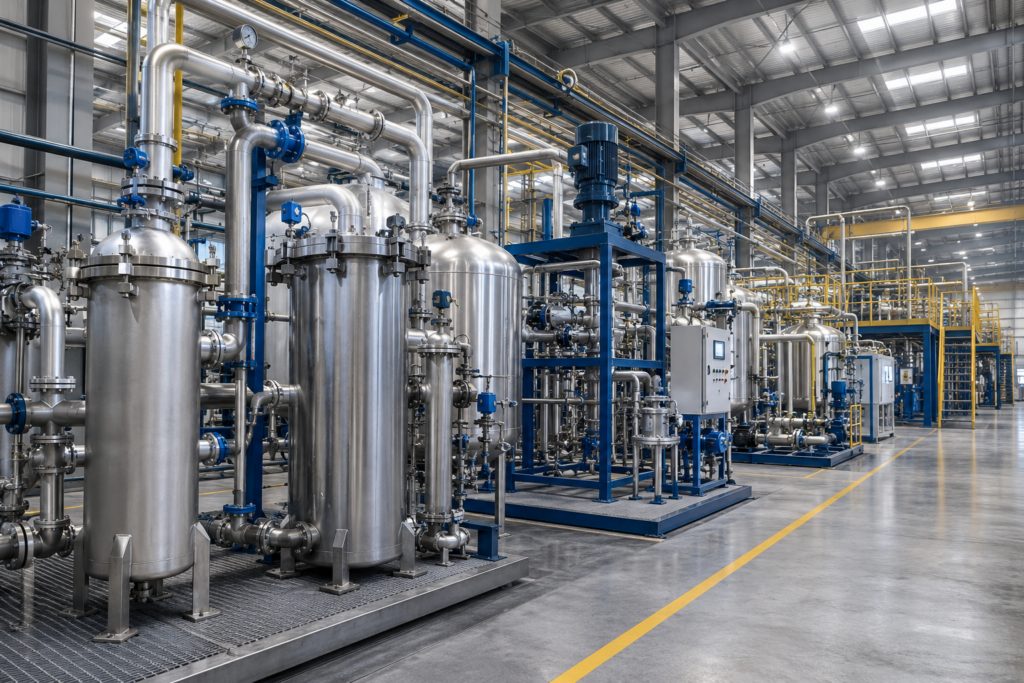
In modern industrial processing, selecting the correct chemical filter is critical for ensuring operational efficiency, product purity, and equipment protection. From solvents to high-viscosity chemicals, filtration plays a vital role in maintaining stable and contamination production systems.
However, choosing the right filtration solution is not straightforward. Industrial applications vary significantly, and the wrong filter selection can lead to system blockages, increased downtime, pressure drops, and higher operational costs.
This is why working with experienced filter manufacturers UK is essential. Specialist industrial filter manufacturers, such as TFI Filtration UK Ltd, understand complex chemical environments and can deliver tailored filtration solutions that improve performance and reliability.
What Is a Chemical Filter?
A chemical filter is an engineered industrial filtration system designed to remove unwanted solids, contaminants, and particulates from chemical liquids, gases, and process fluids.
Depending on the application, chemical filters may be manufactured using advanced materials such as:
- PTFE for high chemical resistance
- Nylon for precision filtration
- Stainless steel for high-pressure and high-temperature systems
- Wire mesh for reusable and heavy-duty applications
Chemical filtration is widely used across industries including chemical manufacturing, pharmaceuticals, petrochemicals, coatings, food processing, and speciality engineering sectors.
TFI Filtration UK supplies high-performance filtration systems including wire-mesh filter cartridges and advanced liquid and gas filtration solutions designed for demanding industrial environments.
Key Factors When Choosing a Chemical Filter
Selecting the right chemical filter requires a structured engineering approach. Below are the most important performance factors to consider.
1. Chemical Compatibility and Fluid Characteristics
The first and most critical step is understanding the chemical being processed. Every fluid behaves differently, and incorrect material selection can lead to rapid filter failure.
Key fluid properties include:
- Chemical composition and concentration
- pH level and corrosiveness
- Viscosity and density
- Operating temperature
- Solid contamination level
- Reactivity with filter media
Highly aggressive chemicals such as acids, alkalis, and solvents require chemically resistant filter materials. A mismatch between fluid and filter media can result in degradation, contamination, and system failure.
This is why leading industrial filters manufacturers always begin with a full chemical compatibility assessment before recommending a solution.
2. Filtration Rating and Particle Removal Efficiency
The filtration rating determines the size of particles the system can remove. Selecting the correct micron rating is essential for balancing efficiency and flow performance.
- Fine filtration → high purity applications
- Coarse filtration → pre-filtration and bulk solids removal
Choosing an overly fine chemical filter can restrict flow, increase pressure drop, and reduce filter lifespan. The optimal solution delivers the required cleanliness without compromising system efficiency.
3. Flow Rate, Pressure, and System Capacity
Every industrial filtration system must be designed to handle specific flow and pressure conditions.
Key design parameters include:
- Required flow rate (L/min or m³/hr)
- Operating and maximum pressure
- Pressure drop tolerance
- Available filtration surface area
- System duty cycle (continuous or batch)
Undersized filters can quickly become blocked, leading to production downtime and increased maintenance costs. Proper sizing ensures stable performance and long service life.
Experienced filter manufacturers UK use engineering calculations to match filtration systems precisely to process requirements.
4. Filter Media and Construction Quality
Filter media selection directly impacts chemical resistance, efficiency, and durability.
Common industrial options include:
- PTFE – extreme chemical and temperature resistance
- PES – high-flow precision filtration
- Nylon – strong mechanical and chemical stability
- Stainless steel mesh – reusable heavy-duty filtration
TFI Filtration UK manufactures pleated cartridges and welded wire-mesh filter systems designed for chemical, solvent, and high-viscosity applications.
Equally important is the filter housing design, which must withstand:
- Chemical exposure
- Pressure fluctuations
- Thermal stress
- Continuous industrial operation
5. Temperature and Operating Environment
Industrial chemical processes often operate under extreme conditions. High temperatures and fluctuating pressures can significantly impact filter performance.
Before selecting a chemical filter, ensure it is rated for:
- Maximum operating temperature
- Thermal cycling conditions
- Pressure stability
- Long-term chemical exposure
Failure to account for operating conditions can result in premature filter breakdown and system inefficiency.
6. Maintenance, Lifespan, and Total Cost of Ownership
The most cost-effective filter is not always the cheapest upfront option. True value comes from long-term performance and reduced operational costs.
Key cost factors include:
- Cleaning and maintenance requirements
- Energy consumption from pressure drop
- Downtime and labour costs
- Disposal and waste handling
7. Select the Right Filter Type
Every filtration application requires a different solution.
Some of the most commonly used industrial filtration products include:
Ideal for fine particle removal, high filtration efficiency, and applications requiring precise contamination control.
Best suited for high-flow industrial liquid filtration where large volumes need continuous processing.
Designed to remove larger contaminants before they reach pumps, valves, and processing equipment.
A cost-effective option that reduces waste and extends service life through repeated cleaning and reuse.
Selecting the right filtration technology improves productivity while reducing long-term operational costs.
Why Work With Leading Filter Manufacturers UK?
Experienced filter manufacturers UK ensure that your filtration system is engineered for performance, safety, and efficiency.
Specialist industrial filter manufacturers like TFI Filtration UK provide:
- Application-specific engineering support
- Custom-designed filtration systems
- High-performance chemical-resistant materials
- Scalable solutions for industrial production
- Technical expertise across multiple industries
TFI Filtration UK supplies a complete range of filtration products including cartridge filters, bag filters, strainers, and gas and liquid filtration systems designed for demanding chemical environments.
Conclusion
Selecting the right chemical filter is a critical engineering decision that directly impacts production efficiency, product quality, and operational safety. Key considerations such as chemical compatibility, filtration rating, flow rate, pressure, temperature, and maintenance requirements must all be carefully evaluated.
By working with trusted filter manufacturers UK and experienced industrial filters manufacturers, businesses can ensure reliable, efficient, and cost-effective filtration performance. TFI Filtration UK Ltd delivers advanced, application-specific filtration solutions designed to meet the challenges of modern chemical processing industries.
Explore TFI Filtration UK’s Cartridge Filter Systems, or contact us today for expert guidance and fast, tailored solutions that optimise your chemical filtration performance.