
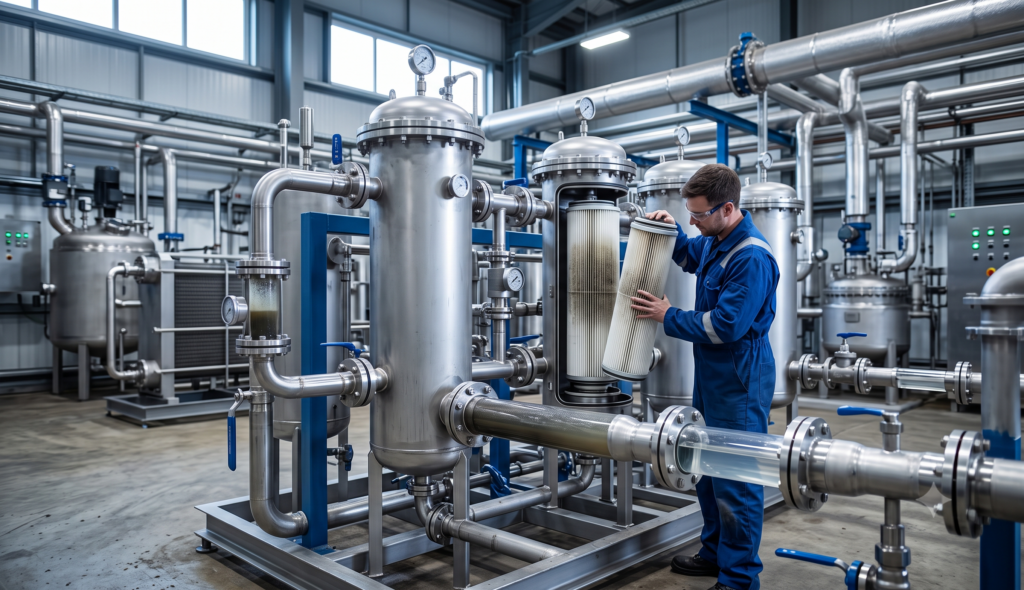
Industrial processes use catalysts to make chemical reactions faster, easier, and more cost-effective. Industries like oil refining, petrochemicals, pharmaceuticals, and chemical manufacturing depend on catalysts to improve production speed, reduce energy use, and increase product quality. But choosing the right catalyst is not enough. You also need proper filtration to remove catalyst particles, recover valuable materials, and protect equipment. This is where catalyst filters play an important role. In this guide, we explain the main types of catalyst, their uses, and why catalyst filtration is important in industrial processes.
What Is a Catalyst?
A catalyst is a substance that speeds up a chemical reaction without being used up. It helps reactions happen faster by lowering the energy needed. In industrial processes, catalysts help:
- Increase production speed
- Improve product quality
- Reduce waste
- Lower operating costs
Catalysts can be solid, liquid, depending on the process.
Types of Catalysts Commonly Recovered Using Catalyst Recovery Filters
Catalyst recovery filters are mainly designed for solid (heterogeneous) precious metal catalysts used in chemical and pharmaceutical manufacturing. These catalysts are valuable and should be recovered for reuse, reducing production costs and minimising waste.
1. Palladium on Carbon (Pd/C)
Palladium on Carbon (Pd/C) is one of the most widely used catalysts in pharmaceutical, fine chemical, and speciality chemical manufacturing.
Typical Applications:
- Hydrogenation reactions
- Pharmaceutical intermediates
- Fine chemicals
- API manufacturing
Since palladium is expensive, recovering catalyst particles after the reaction is economically important. Catalyst recovery filters efficiently separate Pd/C from the process liquid while minimizing product loss.
2. Platinum on Carbon (Pt/C)
Platinum on Carbon (Pt/C) is used where high catalytic activity and excellent chemical stability are required.
Typical Applications:
- Hydrogenation
- Petrochemical processing
- Pharmaceutical manufacturing
- Fine chemical production
Recovery filters capture platinum catalyst particles, allowing valuable catalyst recovery and cleaner process fluids.
3. Rhodium on Carbon (Rh/C)
Rhodium catalysts are used in highly selective chemical reactions requiring excellent catalytic performance.
Typical Applications:
- Pharmaceutical synthesis
- Fine chemicals
- Speciality chemicals
- Hydrogenation processes
Because rhodium is one of the world’s most expensive precious metals, efficient catalyst recovery significantly reduces operating costs.
4. Raney Nickel
Raney Nickel is a porous nickel catalyst commonly used for industrial hydrogenation processes.
Typical Applications:
- Edible oil processing
- Chemical manufacturing
- Pharmaceutical production
- Hydrogenation reactions
Catalyst recovery filters help recover nickel catalyst particles while preventing contamination of downstream equipment.
What are the 4 characteristics of a catalyst?
When choosing the right type of catalyst, consider these four important factors:
- Activity: The ability of a catalyst to increase the rate of a chemical reaction efficiently.
- Selectivity: The capability of a catalyst to direct the reaction toward the desired product while minimising unwanted by-products.
- Stability: The resistance of a catalyst to degradation or deactivation under operating conditions such as heat, pressure, and chemical exposure.
- Reusability: The ease with which a catalyst can be recovered and reused without significant loss of performance.
Why Are Catalyst Filters Important?
Catalyst filters are used to remove catalyst particles from liquids or gases during or after a reaction.
- Recover expensive catalyst material
- Improve product quality
- Protect equipment
- Reduce downtime
- Lower maintenance costs
High-quality filtration systems, like those from TFI Filtration UK, are designed for tough industrial conditions and provide reliable performance. Depending on your process, you may need:
For reusable solutions, cleanable filter cartridges are a great option.
How to Choose the Right Catalyst Filter
Selecting the right catalyst filter system depends on:
- Particle size
- Flow rate
- Temperature and pressure
- Chemical compatibility
- Required filtration level
Fine catalyst powders need high-efficiency filters, while larger particles can be handled with mesh or basket filters. Working with expert industrial filter suppliers ensures you get the right solution for your process.
Conclusion
Understanding the main types of catalyst helps industries improve efficiency, reduce costs, and produce better products. Homogeneous, heterogeneous, biocatalysts, and supported catalysts all have different uses and benefits. However, proper filtration is just as important as catalyst selection. Using the right catalyst filters helps recover materials, protect equipment, and maintain smooth operations. TFI Filtration UK provides reliable filtration solutions designed for industrial processes. Choosing the right catalyst filter system can improve performance, reduce waste, and increase productivity.
FAQs
1. What are the main types of catalysts?
The main types of catalysts are homogeneous catalysts, heterogeneous catalysts, biocatalysts, and supported catalysts. Each type is used for different industrial processes depending on the reaction, operating conditions, and required product quality.
2.What is a catalyst filter?
A catalyst filter is an industrial filtration solution used to remove catalyst particles, catalyst fines, and residue from liquids or gases. It helps recover valuable catalyst material while protecting downstream equipment such as pumps, valves, and heat exchangers.
3.Which catalyst is most commonly used in industrial processes?
Heterogeneous catalysts are among the most commonly used catalysts in large industrial processes. They are usually solid materials used with liquid or gas reactants and are widely used in oil refining, hydrogenation, gas treatment, and chemical manufacturing.
4.What are the four key characteristics of a catalyst?
The four key characteristics of a catalyst are activity, selectivity, stability, and reusability. A good catalyst should speed up the reaction, produce the desired result, remain effective under process conditions, and be easy to recover where possible.
5.Why are catalyst filters important?
Catalyst filters help remove fine particles and prevent valuable catalyst material from being lost during processing. They also improve product purity, reduce equipment wear, lower maintenance needs, and support smoother industrial operations.
6.What types of filters are used for catalyst filtration?
Common catalyst filtration options include cartridge filters, bag filters, sintered metal filters, wire mesh filters, and cleanable filter cartridges. The right choice depends on particle size, flow rate, temperature, pressure, and chemical compatibility.
7.Can catalyst filters help recover and reuse catalysts?
Yes. A properly selected catalyst filter system can capture catalyst particles for recovery or reuse. This can help reduce material waste, control operating costs, and improve the overall efficiency of chemical processing operations.
8.How do I choose the right catalyst filter system?
Consider the catalyst particle size, fluid type, flow rate, operating temperature, pressure, chemical compatibility, and the required filtration level. Working with experienced industrial filter suppliers such as TFI Filtration UK can help you select the right filter media, and micron rating for your process.