
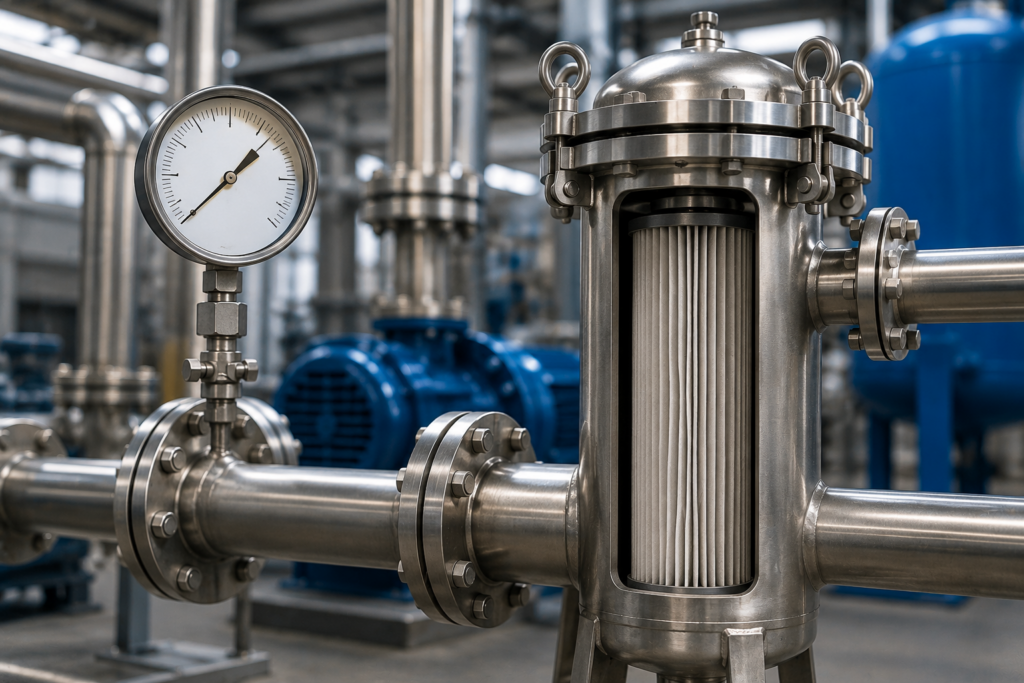
High pressure drop is one of the most common performance issues encountered with industrial filters. A certain amount of pressure drop is normal as fluid passes through filter media, but excessive pressure loss can restrict flow, increase energy consumption and affect the performance of the wider process system.
As an industrial filter captures particles, the differential pressure across the filter generally increases. If the pressure drop becomes too high, the filter may require maintenance. TFI Filtration UK highlights the importance of monitoring differential pressure to prevent flow restriction and maintain effective filtration.
Understanding the causes of high pressure drop can help operators identify problems earlier, improve filter life, and maintain reliable industrial processes.
What Is Pressure Drop in a Filter?
Pressure drop, also known as differential pressure, is the difference between the pressure on the inlet and outlet sides of a filter.
When fluid passes through clean filter media, resistance is generally lower. As particles accumulate on or within the filter, resistance increases, and the pressure difference becomes greater.
A rising pressure drop is therefore often an indication that the filter is becoming loaded. However, unusually high pressure drop from the beginning of operation can indicate incorrect filter selection, insufficient capacity or unsuitable operating conditions.
Causes of High Pressure Drop in Industrial Filters
1. Filter Media Is Clogged
One of the most common reasons for high pressure drop is a clogged filter. As industrial filters capture dirt, solids, rust, scale and other contaminants, the available flow area gradually decreases.
Once the filter becomes heavily loaded, fluid has greater difficulty passing through the media. This increases differential pressure and may reduce the process flow rate.
Regular pressure monitoring can help operators identify when a filter is approaching its service limit.
2. The Filter Is Undersized
Choosing an industrial filter that is too small for the required flow rate can create excessive pressure drop even when the filter is relatively clean.
An undersized filter has less effective filtration area available to handle the process flow. This can result in higher fluid velocity through the media and faster loading.
Proper filter sizing should consider flow rate, fluid viscosity, contaminant concentration, operating pressure and required filter life. TFI recommends considering filter sizing and the factors that affect filter life to help reduce operating costs and the total cost of ownership.
3. Incorrect Filter Rating
Choosing the correct micron rating is essential for maintaining efficient filtration and controlling high pressure drop in industrial filters. The micron rating determines the size of particles the filter is designed to capture and should be selected according to the required level of contamination removal.
An unsuitable rating can increase filtration resistance, accelerate filter loading and reduce the overall service life of the filter element. The right micron rating should therefore be determined by considering the contaminant size, required filtration efficiency, fluid characteristics, flow rate and expected dirt load.
Proper filter rating selection helps maintain a balance between effective particle removal, consistent flow and manageable pressure drop, supporting reliable industrial filtration performance.
4. High Fluid Viscosity
Fluid viscosity has a major influence on filtration performance. Thick or highly viscous liquids naturally require more force to move through filter media.
Applications involving oils, resins, paints, waxes and similar fluids may therefore experience greater pressure loss than applications involving low-viscosity liquids.
For high-viscosity liquids, selecting an appropriate filter design and sufficient filtration area is particularly important. TFI’s bag filter systems, for example, are designed for applications involving high-viscosity liquids and high particle loads while offering high flow rates and low pressure drop.
5. Excessive Contaminant Loading
A filter can become overloaded when the process fluid contains more contaminants than the filtration system was designed to handle.
High levels of suspended solids, abrasive particles, rust or process debris can rapidly fill the filter’s available capacity. This causes pressure drop to rise much faster than expected.
In these situations, improving upstream filtration or adding a pre-filtration stage can reduce the contaminant load reaching the final filter.
6. Poor Filter or Media Selection
Not all industrial filters are suitable for every process. Selecting filter media without considering the fluid characteristics, temperature, chemical compatibility and contaminant type can lead to poor performance.
The filter’s construction and media should be matched to the application. Industrial liquid filters are available in different materials, sizes and configurations, so selecting the appropriate design is essential for maintaining efficient filtration.
For demanding applications, specialised filter technologies may provide better flow characteristics. TFI’s wedge-wire slotted filter cartridges, for example, are designed with anti-clogging slots and a low-pressure-drop structure for efficient fluid flow.
7. Operating Conditions Have Changed
A filtration system that performed well when first installed may experience higher pressure drop if operating conditions change.
Changes in flow rate, temperature, fluid viscosity, contaminant concentration or production volume can all affect filter performance. Increasing production capacity without reviewing the existing filtration system may place additional demand on the filter. For this reason, pressure drop should be monitored alongside important process parameters. Sudden changes can provide an early warning that the filtration system requires attention.
How to Reduce High Pressure Drop
Reducing excessive pressure drop starts with identifying the underlying cause. Operators can consider:
- Selecting the correct filter size and filtration rating.
- Monitoring inlet and outlet pressure regularly.
- Replacing or cleaning loaded filter elements promptly.
- Using pre-filtration for applications with heavy contaminant loads.
- Selecting filter media compatible with the process fluid.
- Providing sufficient filtration area for the required flow rate.
- Reviewing filtration requirements when production conditions change.
A well-designed system should provide the required level of filtration without creating unnecessary resistance.
Why Low Pressure Drop Matters
Maintaining an appropriate pressure drop is important for both filtration performance and overall operating efficiency. Excessive resistance can restrict process flow and may increase the energy required to move fluids through the system.
Low-pressure-drop filter designs can help maintain efficient flow while supporting reliable filtration. TFI’s wedge-wire filter cartridges are specifically designed to provide low pressure drop alongside high flow rates and resistance to clogging.
Conclusion
High pressure drop in industrial filters can result from clogged media, incorrect sizing, unsuitable micron ratings, viscous fluids, excessive contaminant loading, poor filter selection or changing operating conditions.
Understanding why pressure drop is increasing can help businesses select a more suitable filtration system, extend filter service life and reduce unnecessary maintenance and operating costs.
By choosing the right industrial filters, monitoring differential pressure and reviewing filtration requirements as process conditions change, manufacturers can maintain consistent flow and more reliable filtration performance.