
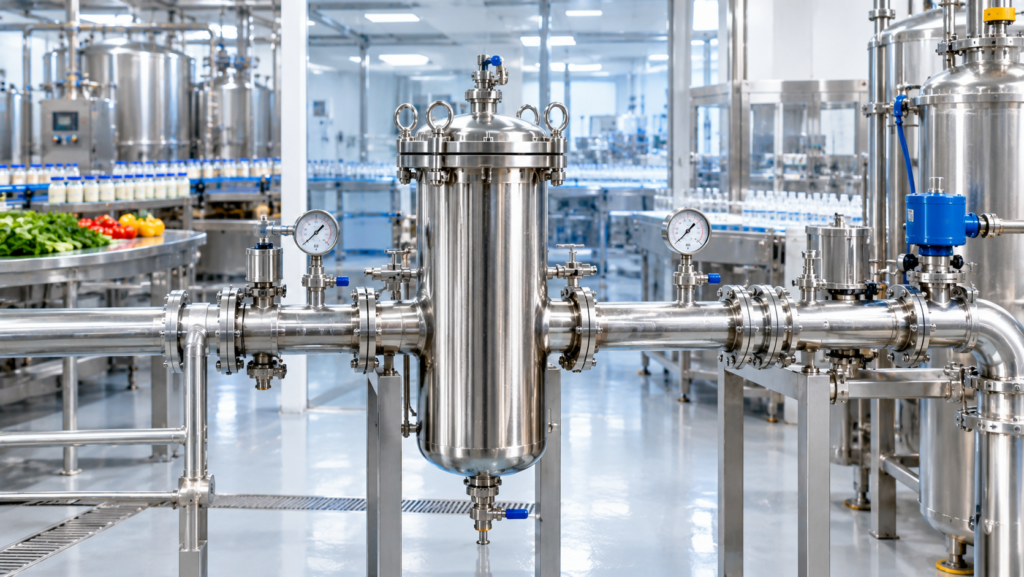
Steam is an essential utility in many modern manufacturing facilities. It is used for heating, cooking, sterilization, cleaning, pasteurization, and other process applications. However, steam generated by a boiler is not necessarily free from unwanted particles or contaminants by the time it reaches the point of use.
This is where steam filtration becomes important. A correctly selected steam filtration system can help remove particulate contamination, protect downstream equipment, and maintain the quality and reliability of steam used throughout a production process.
For industries such as food and beverage, pharmaceuticals, and general process manufacturing, maintaining appropriate steam quality can improve process control, product protection, and operational efficiency.
What Is Steam Filtration?
Steam filtration is the process of filtering steam before it reaches a critical application or piece of equipment. During generation and distribution, steam can pick up contaminants such as rust, pipe scale, dirt, and other particles from boilers and pipework. Condensate and impurities associated with boiler feed water can also affect steam quality.
A steam filter is designed to capture unwanted particulate matter and help provide cleaner steam at the point of use. The appropriate filtration level depends on how the steam is being used.
For example, process steam may be used primarily for indirect heating, while culinary steam can come into direct contact with food or food-contact surfaces. Pharmaceutical applications may require even more controlled steam quality for sterilization and other critical processes.
Key Advantages of Steam Filtration
1. Helps Protect Product Quality
In food and beverage manufacturing, steam can be used directly in cooking, blanching, pasteurization, and other processes. If contaminants are carried with the steam, they can potentially affect the appearance, flavour, or overall quality of the finished product.
Steam filtration provides an additional barrier against particulate contamination before steam enters a critical process. This is particularly important where steam comes into direct contact with food or food-contact surfaces.
2. Protects Valves, Nozzles and Process Equipment
Steam distribution systems contain valves, regulators, injectors, nozzles, and other components that can be affected by particles and scale.
Accumulated debris can restrict small openings, contribute to fouling, and increase maintenance requirements. Effective steam filtration helps reduce the amount of particulate material reaching sensitive downstream components.
This can support more reliable operation and help reduce avoidable interruptions caused by blocked or contaminated equipment.
3. Supports Food & Beverage Hygiene
Steam is widely used throughout food processing facilities for cooking, cleaning, and sanitation. Where steam comes into contact with products or food-contact surfaces, its quality becomes particularly important.
Culinary steam filtration can help control particulate contamination and support hygienic processing. The filtration system should always be selected according to the specific application, operating conditions, and applicable industry requirements.
4. Important for Pharmaceutical Applications
Pharmaceutical manufacturing requires highly controlled production environments. Steam may be used for cleaning, sterilization, Clean-in-Place (CIP), and Sterilize-in-Place (SIP) operations.
In these applications, steam quality can be an important part of the overall process. Properly designed filtration can help protect equipment and critical process areas from particulate contamination.
The exact requirements depend on the application, system design, and applicable pharmaceutical standards, so steam filtration should be considered as part of the complete steam-generation and distribution system rather than as a standalone solution.
5. Improves Process Reliability
Contaminants in steam can accumulate in pipework and downstream equipment. Over time, this may contribute to fouling, pressure losses, or inconsistent operation.
A suitable steam filter helps control particulate contamination and can support a cleaner distribution system. Maintaining appropriate steam quality can therefore contribute to stable process performance and reduce unnecessary maintenance.
6. Helps Protect Heat Transfer Efficiency
Steam is commonly used as a heating medium in industrial processing. Contamination and deposits can affect heat-transfer equipment and associated components.
By reducing particulate contamination before steam reaches critical equipment, filtration can help minimize fouling and support efficient heat transfer. This is particularly useful in processes where consistent temperature control is important.
Steam Filtration for Different Industries
Steam is an essential utility across many manufacturing environments, but its filtration requirements can vary significantly depending on how and where it is used. Factors such as direct product contact, hygiene requirements, operating temperature, pressure, and the sensitivity of downstream equipment all influence the type of steam filtration required.
From food processing and pharmaceutical manufacturing to general process industries, an appropriately designed steam filtration system can help control particulate contamination, protect equipment, and support consistent process performance.
Food & Beverage Industry
In the food and beverage industry, steam is commonly used for cooking, pasteurization, blanching, steam peeling, direct steam injection, cleaning and sterilization. When steam comes into direct contact with food, beverages or product-contact surfaces, controlling contaminants becomes particularly important.
Culinary steam filtration is designed to help remove physical contaminants such as rust, scale and other debris that may be carried through steam distribution pipework. This can help protect product quality while also reducing the risk of particles reaching sensitive equipment or food-contact areas.
For indirect applications, such as heat exchangers and steam tracing, filtration can also help reduce fouling and protect valves, nozzles and other components from particulate contamination.
Pharmaceutical Industry
Pharmaceutical manufacturing places a strong emphasis on controlled and hygienic processing conditions. Steam can be used in applications such as Sterilize-in-Place (SIP), equipment sterilization, cleaning, and other critical process operations.
In these environments, steam quality can be an important part of overall process control. Filtration helps control particulate contamination in steam lines and protects downstream equipment and process areas. Pharmaceutical facilities may also use filtration at multiple points throughout their utility and production systems to help control potential contamination sources.
Because pharmaceutical applications can have specific validation, hygiene, and regulatory requirements, the steam filter should be selected according to the individual process, operating conditions, and applicable standards.
Process and Industrial Applications
In general process industries, steam is frequently used for process heating, heat exchangers, pressure control, humidification, and other utility applications. While these uses may not always involve direct product contact, contamination in the steam system can still affect equipment performance.
Particles such as rust, scale, and debris can potentially accumulate in valves, pressure-reducing equipment, small orifices, and heat-transfer surfaces. A suitable steam filter can help reduce the amount of particulate contamination reaching these components, supporting reliable operation and helping minimize maintenance issues.
Steam filtration is also used across industries such as chemical processing, biotechnology, and other demanding manufacturing environments, where hygienic or controlled steam may be required.
Choosing the Right Steam Filtration System
There is no single steam filter that is suitable for every application. The filtration system should be selected according to the specific operating and process requirements.
Important considerations include steam pressure and temperature, flow rate, filtration rating, contaminant levels, filter material, connection type, installation location, and whether the steam will have direct or indirect product contact.
For culinary or direct-contact applications, additional attention should be given to hygienic design, condensate management, and the suitability of materials for the intended use. Proper installation at or close to the point of use can also be important because contaminants may potentially enter the steam downstream of the filtration system.
Selecting the correct combination of filter housing and filter element can therefore help achieve the required level of steam quality while maintaining efficient flow and reliable operation.
Conclusion
Steam filtration helps maintain cleaner steam, protect equipment, and support reliable processes across food, pharmaceutical, and industrial applications. Choosing the right filter for the operating conditions and application is essential for effective performance. TFI Filtration UK provides filtration solutions designed for different industrial requirements, including steam filtration applications.
Faq
1. What is steam filtration?
Steam filtration is the process of removing unwanted particulate contaminants from steam before it reaches a process, product-contact area, or downstream equipment.
2. Why is steam filtration important in food processing?
Steam filtration can help reduce particles such as rust, scale, and other debris that may otherwise enter food-processing equipment or come into contact with food products.
3. Is steam filtration used in pharmaceutical manufacturing?
Yes. Steam filtration can be used in pharmaceutical environments for applications involving sterilisation, cleaning and other controlled processes. The filtration requirements depend on the specific application and applicable standards.
4. How do I choose the right steam filter?
The correct filter depends on factors including steam pressure, temperature, flow rate, filtration requirement, contaminant load, materials, and whether the steam has direct or indirect contact with the product or process equipment. A specialist filtration supplier can help determine the appropriate configuration.