
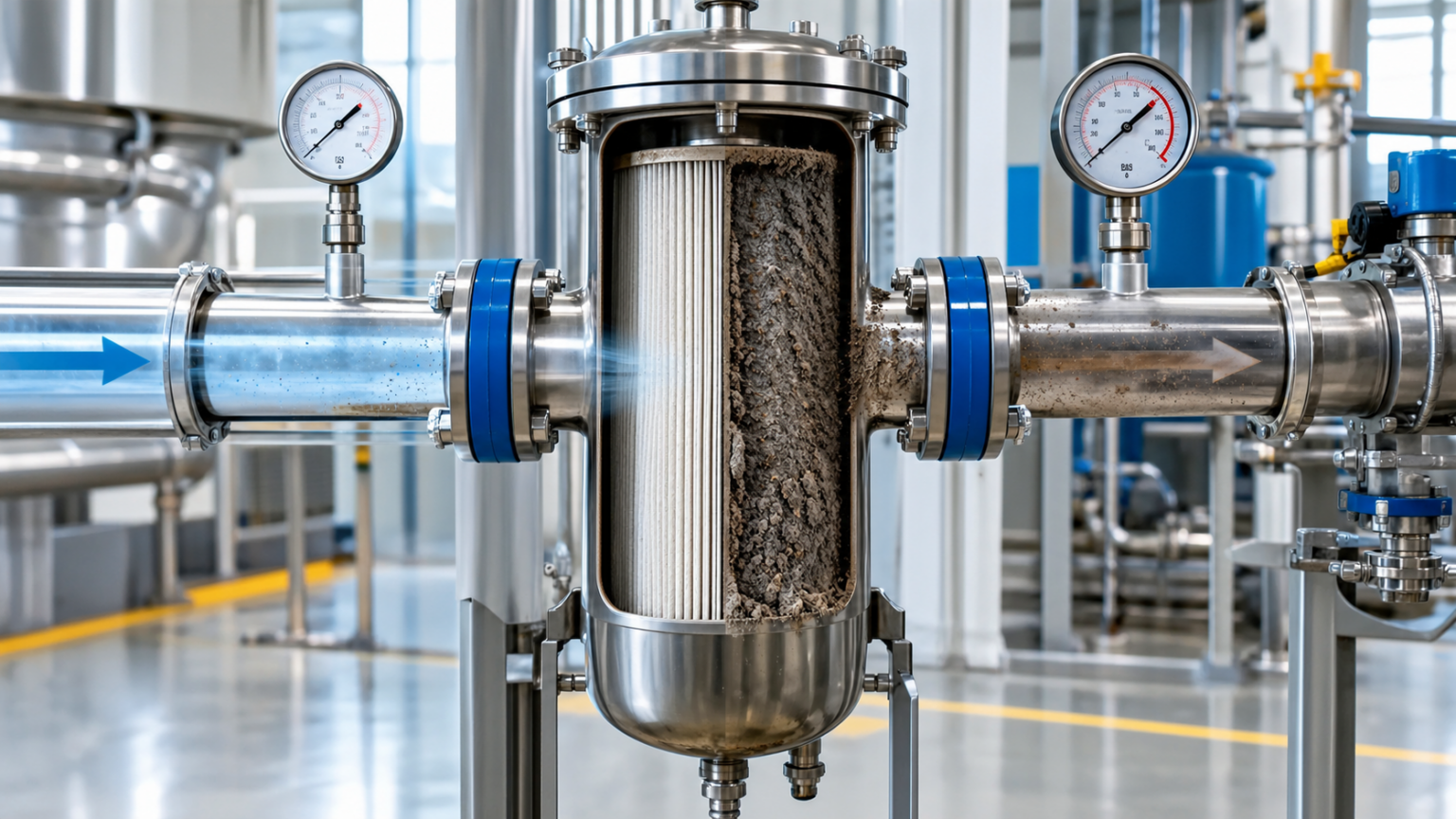
Industrial Gas Filter performance depends on maintaining the right balance between filtration efficiency and pressure drop. When differential pressure rises beyond the expected level, gas flow can become restricted, energy consumption can increase, and downstream equipment may experience additional strain. What causes high pressure drop in an Industrial Gas Filter? Common causes include filter contamination, incorrect sizing, excessive flow, unsuitable filter media, and inadequate maintenance. Identifying these factors early supports reliable filtration, efficient operation, and longer filter service life.
What Is Pressure Drop in an Industrial Gas Filter?
Pressure drop is the difference in pressure between the gas entering and leaving an Industrial Gas Filter. It indicates the level of resistance the filter creates as gas passes through the filter media.
When the filter element is clean, gas can flow through with relatively low resistance. During operation, dust, particles, moisture, and other contaminants can accumulate on the media, reducing the available flow area and gradually increasing pressure drop.
A certain level of pressure drop is normal in any filtration system. However, a continuous or excessive increase can indicate that the filter is becoming restricted or that operating conditions are placing greater demand on the system. Monitoring pressure drop helps industrial operators identify filter loading early and maintain consistent gas flow and filtration performance.
What Causes High Pressure Drop in an Industrial Gas Filter?
Several factors can contribute to high pressure drop. Understanding the cause makes it easier to select the right corrective action.
1. Filter Element Contamination
One of the most common reasons for increasing pressure drop is contamination of the filter element.
Industrial gas streams can contain dust, rust particles, pipe debris, oil aerosols, moisture, and other contaminants. As these materials accumulate on or inside the filter media, gas has less open area through which to flow. Resistance therefore increases.
If the differential pressure continues rising during operation, the filter element should be inspected against the manufacturer’s recommended service or cleaning limits.
2. Incorrect Filter Sizing
An undersized filter can create high pressure drop even when the element is new.
If the filter does not provide sufficient filtration area for the required gas flow, gas velocity through the media can become unnecessarily high. This increases resistance and may also shorten filter service life.
Correct sizing should consider the minimum, normal and maximum gas flow, operating pressure, temperature, gas composition, required filtration efficiency and allowable pressure drop.
Proper filter sizing is therefore an important part of achieving efficient industrial filtration. TFI Filtration UK develops filtration solutions based on application requirements rather than relying on a single standard filter configuration.
3. Excessive Gas Flow
A filter may operate satisfactorily at normal flow but experience a significant pressure drop when demand increases.
For example, if gas consumption rises above the original design flow, more gas must pass through the same filter area. This increases flow velocity and can increase pressure loss.
Peak operating conditions should therefore be considered during the selection of an Industrial Gas Filter, rather than sizing the system only around average flow.
4. Filter Media That Is Too Fine
Fine filtration provides greater particle removal, but finer media can also offer greater resistance to gas flow.
Selecting the smallest possible micron rating is not always the correct approach. The filtration requirement should be balanced with flow capacity, contaminant loading, pressure-drop requirements, and the required level of protection.
The correct filter media can help maintain filtration performance without creating unnecessary resistance.
5. Moisture and Liquid Carryover
Gas systems may also experience pressure-drop problems when moisture, condensate, or liquid contaminants enter the filter.
Liquid accumulation can restrict the effective filtration area and increase resistance. In compressed-air and gas applications, controlling upstream moisture and ensuring appropriate drainage can therefore be important for maintaining stable filter performance.
The gas condition, operating temperature, and potential for condensation should be considered when designing the filtration system.
6. Poor Filter Maintenance
Even a correctly selected filter can develop high pressure drop when inspection, cleaning, or element replacement is delayed.
Monitoring differential pressure provides useful information about the condition of the filter. A gradual increase may indicate normal contaminant loading, while a sudden change may point to an unusual contamination event, excessive flow, or another system problem.
How Can High Pressure Drop Be Reduced?
The first step is to determine whether the pressure drop is coming from the filter element, the housing, operating conditions, or the wider gas system.
Check the actual gas flow against the filter’s design capacity. Inspect the element for contamination and verify that the selected filtration grade is suitable for the application. It is also important to check whether moisture, oil aerosol, dust, or pipe debris is entering the filter at a higher level than expected.
For systems using cartridge filtration, selecting the appropriate filter and housing combination is essential. TFI Filtration UK manufactures cartridge filters and filter housings in different designs and configurations for industrial filtration requirements.
A useful related resource is TFI Filtration UK’s information on Filter Systems, which can help when evaluating filtration requirements and system design.
Why Low Pressure Drop Matters
Reducing unnecessary pressure drop can improve overall system efficiency. When gas encounters excessive resistance, the system may require more energy to maintain the required flow and pressure.
For this reason, pressure drop should be considered from the beginning of filter selection rather than only after a problem develops.
A properly sized filter, suitable filter media, appropriate flow capacity, and regular differential-pressure monitoring can help maintain reliable filtration while reducing unnecessary operating losses.
Conclusion
Understanding what causes high pressure drop in an Industrial Gas Filter is essential for maintaining reliable gas filtration and efficient industrial operations. Contaminated filter elements, incorrect sizing, excessive flow, unsuitable media, moisture, and delayed maintenance can all contribute to increasing differential pressure.
The right solution starts with understanding the gas, flow conditions, contaminants, and required filtration performance. By selecting an appropriately sized Industrial Gas Filter, using suitable filter media and monitoring pressure drop throughout operation, industries can maintain effective filtration while helping to minimise unnecessary energy loss and downtime.
For application-specific filtration requirements, TFI Filtration UK provides industrial filtration solutions designed around process conditions, filter media and system requirements.