
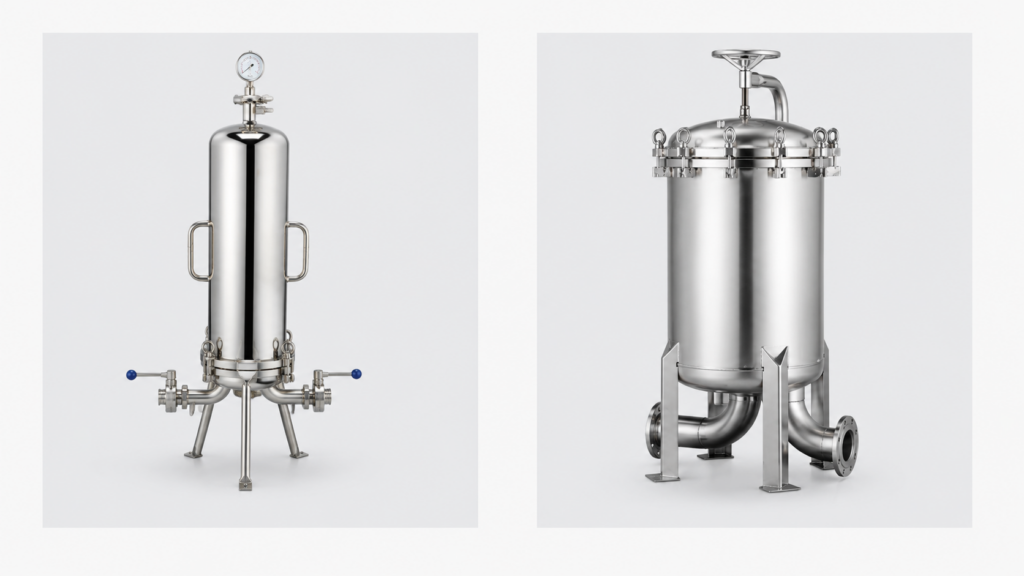
Selecting the right industrial cartridge filter housing is critical for ensuring efficient filtration, protecting downstream equipment, and maintaining consistent product quality. One of the most important decisions for industrial buyers is choosing between a single-cartridge and a multi-cartridge filter housing.
Both systems are designed to remove contaminants from liquids, but they differ significantly in capacity, performance, and application suitability. A single-cartridge housing is ideal for compact systems with lower flow rates, while a multi-cartridge housing is engineered for high-flow, heavy-duty industrial processes.
This guide explores the key differences between a single vs multi-cartridge filter housing, helping you choose the most effective solution for your filtration needs.
What Is a Single-Cartridge Filter Housing?
A single-cartridge filter housing contains one filter element within a compact and efficient design. It is best suited for applications with lower flow rates or where space is limited.
These housings are easy to install, operate, and maintain. With only one cartridge to replace or clean, maintenance is quick and cost-effective. This makes them ideal for small-scale operations, pilot plants, point-of-use filtration, and polishing applications.
TFI Filtration UK manufactures high-quality single-cartridge housings using materials such as SS304, SS316, and SS316L. These housings support various cartridge configurations, including both-end-open, threaded, and CODE-VII. Closure options include quick-opening clamps or eye-bolt designs, depending on pressure requirements.
Their compact flexible installation options, including inline and T-type configurations, make them a practical choice for facilities with limited space.
What Is a Multi-Cartridge Filter Housing?
A multi-cartridge filter housing is designed to hold multiple filter cartridges within a single vessel. This significantly increases the filtration surface area, allowing the system to handle higher flow rates and larger volumes of liquid.
These housings are ideal for demanding industrial applications where a single cartridge cannot meet performance requirements. Industries such as chemical processing, pharmaceuticals, oil and gas, and large-scale water treatment commonly rely on multi-cartridge systems.
By distributing flow across multiple cartridges, these systems reduce pressure drop and extend filtration cycles. This improves efficiency and reduces downtime for maintenance.
TFI Filtration UK offers robust multi-cartridge housings with options for various cartridge quantities, connection types, and closure systems. Features such as swing bolts and lifting mechanisms make handling and maintenance easier, especially for larger units.
Single vs Multi-Cartridge Filter Housing: Key Differences
| Feature | Single-Cartridge Filter Housing | Multi-Cartridge Filter Housing |
| Filtration Capacity | Lower capacity, suitable for smaller volumes | Higher capacity due to multiple cartridges |
| Flow Handling | Best for low to moderate flow rates | Designed for high-flow applications |
| Size & Space | Compact and space-saving | Larger footprint required |
| Cost | Lower initial investment | Higher upfront cost |
| Maintenance | Easier and quicker to maintain | Requires more time due to multiple cartridges |
| Operational Cycle | Shorter cycles, more frequent changes | Longer cycles, fewer replacements |
| Application | Small systems, point-of-use filtration | Large-scale, continuous industrial processes |
When Should You Choose a Single-Cartridge Housing?
A single-cartridge housing is the right choice when your application involves lower flow rates, limited contamination, or restricted installation space.
It is particularly suitable for polishing filtration, laboratory use, pilot systems, and equipment protection. These housings are also ideal when quick and simple maintenance is required.
TFI Filtration UK designs single-cartridge housings that are easy to dismantle and clean, making them highly practical for routine operations.
When Is a Multi-Cartridge Housing the Better Option?
A multi-cartridge housing is recommended for applications requiring high flow rates, large filtration capacity, or extended operating cycles.
Industries such as water treatment, petrochemicals, pharmaceuticals, and food processing benefit from these systems due to their ability to handle large volumes efficiently.
If your current system experiences frequent cartridge changes or high pressure drop, upgrading to a multi-cartridge housing can significantly improve performance and reduce downtime.
Important Factors When Choosing a Filter Housing
When selecting a cartridge filter housing, several factors must be considered beyond flow rate.
Fluid characteristics such as viscosity, chemical composition, and contaminant type play a crucial role. The required micron rating and cartridge material must also be matched to the application.
Material selection is equally important. TFI Filtration UK offers housings in stainless steel grades such as SS304 and SS316L, as well as specialised materials like Hastelloy, Monel, duplex steel, and Alloy 20 for aggressive environments.
Seal compatibility is another key consideration. Options such as silicone, Viton, PTFE, and EPDM ensure reliable performance under different temperatures and chemical conditions.
Additional features such as vent valves, drain ports, sampling points, and instrumentation connections should also be evaluated based on process requirements.
Standard vs Custom Cartridge Filter Housing
While standard housings are suitable for many applications, some processes require customised solutions.
Custom stainless steel filter housing designs are ideal for handling unique pressures, temperatures, or installation constraints. TFI Filtration UK provides tailored filtration systems to meet specific operational and environmental requirements.
Providing detailed process information ensures that the housing design, cartridge configuration, and materials are optimised for maximum performance and reliability.
Choose the Right Cartridge Filter Housing with TFI Filtration UK
Understanding the differences between a single vs multi-cartridge filter housing is essential for selecting the right filtration system.
Single-cartridge housings offer simplicity, compact design, and cost efficiency for smaller applications. Multi-cartridge housings deliver high capacity, improved efficiency, and longer service life for demanding industrial processes.
As a trusted filter housing supplier UK, TFI Filtration UK offers a comprehensive range of single and multi-cartridge filter housings, including customised solutions tailored to your needs.
Contact TFI Filtration UK today to find the ideal filtration system for your process and ensure reliable, high-performance operation.
Faq
1. What is the difference between a single and multi-cartridge filter housing?
A single-cartridge filter housing contains one filter element and is suitable for low to moderate flow rates. A multi-cartridge filter housing holds several cartridges, providing a larger filtration area for high-flow and heavy-duty industrial applications.
2. What are the benefits of a multi-cartridge filter housing?
A multi-cartridge filter housing can handle higher flow rates, larger liquid volumes and heavier contaminant loads. It can also reduce pressure drop, extend filtration cycles and minimise production downtime.
3. Which material is best for an industrial cartridge filter housing?
SS304 is commonly used for general industrial and water applications, while SS316L provides better corrosion resistance for chemicals, pharmaceuticals, food processing and demanding environments. Special materials such as Hastelloy, Monel and duplex steel may be required for aggressive fluids.
4. Can cartridge filter housings be customised?
Yes. Custom cartridge filter housings can be manufactured with specific materials, connections, cartridge quantities, pressure ratings, closure systems and instrumentation ports to meet individual process requirements.
5. How often should filter cartridges be replaced?
Replacement frequency depends on contaminant load, flow rate, filter type and differential pressure. Cartridges should normally be cleaned or replaced when pressure drop increases, flow decreases or filtrate quality no longer meets process requirements.
6. Can multi-cartridge housings reduce filtration downtime?
Yes. Their larger filtration surface area allows contaminants to be distributed across multiple cartridges. This can extend operating cycles and reduce the frequency of cartridge replacement when the system is correctly sized.
7. Are cartridge filter housings suitable for chemical filtration?
Yes. Cartridge filter housings are widely used for chemical and solvent filtration. The housing material, cartridge media and seal material must be compatible with the chemical being processed.
8. Where can I buy single and multi-cartridge filter housings in the UK?
TFI Filtration UK supplies single and multi-cartridge filter housings for water treatment, chemical processing, pharmaceuticals, food and beverage, petrochemicals and other industrial applications. Standard and customised systems are available based on process requirements.