
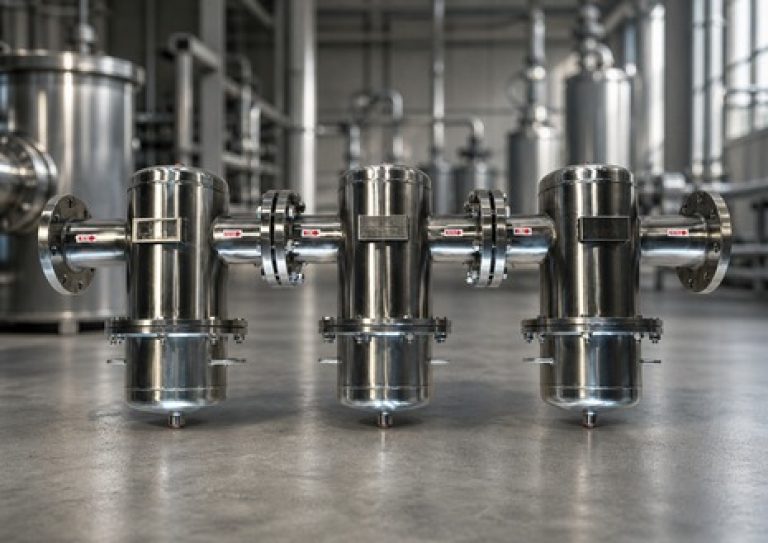
In many industrial sectors across the UK, compressed air is an essential utility used daily in manufacturing, processing, and automation. However, its quality is often underestimated. Contaminants such as oil, moisture, and fine particulates can enter the compressed air system and gradually compromise equipment performance, reduce operational efficiency, and impact end-product quality.
Over time, these impurities can lead to unplanned downtime, increased maintenance costs, and inconsistent production output. Selecting the right compressed air filtration system is therefore critical to maintaining system integrity and operational reliability.
At TFI Filtration UK, advanced filtration solutions are engineered to effectively remove these contaminants, ensuring clean, dry, and consistent compressed air for a wide range of industrial applications.
What Is an Industrial Compressed Air Filter?
An industrial compressed air filter is designed to eliminate contaminants and ensure a consistent supply of clean, dry, and oil-free air throughout the system.
Contamination in compressed air typically originates from:
- Ambient air intake (dust, dirt, and airborne particles)
- Compressor operation (oil aerosols and vapours)
- Cooling processes (moisture due to condensation)
Without effective filtration, these contaminants circulate through pipelines, negatively affecting both equipment performance and product quality.
Why Filtration Matters in Industrial Applications
Poor compressed air quality can result in:
- Premature equipment wear and failure
- Product contamination (particularly critical in pharmaceutical and food industries)
- Increased maintenance and operational costs
- Higher energy consumption due to pressure drops
High-performance filtration systems, including stainless steel wire mesh cartridges, are specifically designed to minimise these risks by maintaining low pressure drop and ensuring long service life.
Types of Filters Used in Compressed Air Systems
To achieve optimal air purity, industrial systems typically employ a multi-stage filtration approach, combining different filter technologies:
SS316L Sintered Powder Filter Cartridge
- Manufactured using diffusion-bonded stainless steel powder, providing a rigid porous structure with precise and uniform pore size distribution for consistent filtration performance.
- High mechanical strength and corrosion resistance make it suitable for high-pressure and high-temperature compressed air systems.
- Cleanable and reusable design enables multiple regeneration cycles through backflushing or ultrasonic cleaning, reducing lifecycle cost.
- Capable of handling moisture-laden and aggressive compressed air streams without structural degradation.
SS316L Wire Mesh Filter Cartridge
- Constructed from multilayer woven stainless steel mesh, offering high dirt holding capacity with low initial pressure drop.
- Suitable for pre-filtration and removal of coarse to medium particulate contaminants in compressed air lines.
- Cleanable and reusable, allowing easy maintenance and extended service life in continuous operations.
- Strong and durable structure ensures stability under varying pressure and flow conditions.
SS316L Sintered Non-Woven Fiber Filter Cartridge
- Engineered with sintered non-woven stainless steel fibers, delivering high filtration efficiency up to 0.5 micron with depth filtration characteristics.
- Optimized low wall thickness (~0.9 mm) ensures very low clean pressure drop, resulting in higher flow rates and longer filtration cycles.
- Cleanable and reusable construction supports repeated use without compromising filtration efficiency.
- Fully welded design prevents bypass and allows customization in shape and fittings for system compatibility.
Borosilicate Glass Fiber Filter Cartridge
- High-performance media capable of ultra-fine filtration down to 0.001 micron, ideal for removal of oil mist, aerosols, and sub-micron particles.
- High porosity structure ensures excellent dirt holding capacity while maintaining low pressure drop.
- Chemically inert and moisture-resistant, suitable for critical compressed air applications requiring high purity.
- Typically used as a final filtration stage to meet stringent air quality standards in sensitive industries.
How to Choose the Right Filter
Selecting the right compressed air filter requires a clear understanding of your specific operational requirements rather than a one-size-fits-all approach.
Air Quality Requirements:
Different industries demand different air purity levels. For example, pharmaceutical and food industries require ultra-clean, oil-free air, whereas general manufacturing may only require basic particulate filtration.
Filtration Media Selection:
- Wire mesh filter cartridges are ideal for high-flow applications due to their high porosity, low pressure drop, and long service life.
- Sintered metal filters are suited for high-pressure and critical environments, offering durability and cleanability.
- Wedge wire filters support continuous operation with anti-clogging properties and high flow efficiency.
Operating Conditions:
Temperature, pressure, and environmental exposure must be considered. High-temperature systems require heat-resistant materials, while corrosive environments demand specialised construction such as SS316L.
Filter Housing Design:
A robust housing ensures leak-proof performance and easy maintenance. Stainless steel housings (SS304 or SS316L) are widely used for their strength and corrosion resistance.
Common Mistakes to Avoid
- Using disposable filters where reusable systems are more cost-effective
- Ignoring pressure drop and its impact on energy efficiency
- Selecting incorrect micron ratings
- Not implementing multi-stage filtration
- Overlooking maintenance planning
These issues often lead to higher operational costs and reduced system performance.
Benefits of Choosing the Right Filtration System
A well-designed compressed air filtration system delivers measurable operational benefits:
- Improved equipment lifespan
- Enhanced product quality
- Lower energy consumption
- Reduced downtime
- Significant cost savings over time
At TFI Filtration UK, the emphasis is on cleanable and reusable filtration solutions that reduce waste while ensuring consistent, long-term performance.
Conclusion
Choosing the right compressed air filtration system is not just about removing contaminants, it is about improving efficiency, protecting critical equipment, and maintaining consistent product quality.
A strategically designed filtration system can significantly reduce operational costs while enhancing overall system reliability. With advanced solutions such as high-porosity wire mesh cartridges, durable sintered metal filters, and robust stainless steel housings, TFI Filtration UK delivers dependable, application-specific filtration systems tailored to diverse industrial needs across the UK.
FAQs
- What is the best filter for compressed air systems?
A multi-stage filtration system combining particulate, coalescing, and activated carbon filters provides the most effective solution. - How often should compressed air filters be replaced?
Typically every 6 to 12 months, depending on operating conditions and contamination levels. - What micron rating is ideal?
It ranges from 0.01 micron for high-purity applications to around 40 microns for basic filtration. - Why are wire mesh filters used?
They offer high flow rates, durability, and low pressure drop, making them ideal for industrial applications. - Do industrial systems require multiple filters?
Yes, multi-stage filtration ensures effective removal of particles, oil, and moisture.